



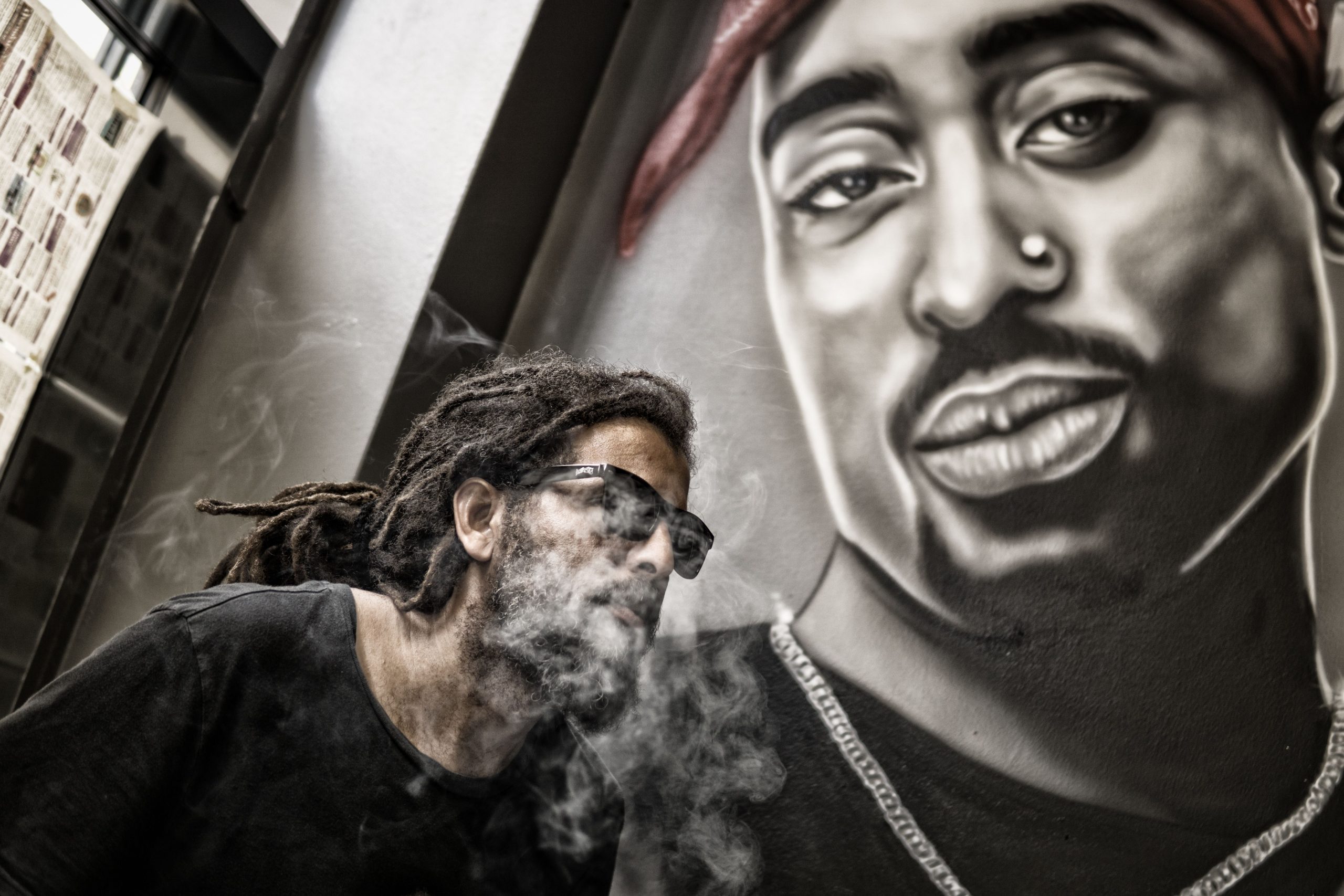
Week Five of Witness Testimony
On a Friday morning in August 2026, nearly thirty years after Tupac Shakur was shot four times on Flamingo Road following the Bruce Seldon-Mike Tyson fight at the MGM Grand, a Las Vegas courtroom is hearing testimony in the murder case that has haunted the city’s history and popular culture for three decades. The Tupac murder trial is in day five of witness testimony as of August 21, 2026. Duane “Keffe D” Davis, who was arrested in September 2023 and charged with first-degree murder, is the defendant. What’s being litigated is not just the killing of one of the most significant musical artists of the twentieth century, but the long-delayed functioning of a justice system that took twenty-seven years to bring a case to trial.
Prosecutors see the killing of Shakur as the culmination of a clash involving rival gangs and record companies, a framework that situates the murder within the specific cultural and criminal geography of 1990s hip-hop’s East Coast-West Coast conflict. The trial’s witness testimony is filling in details of that narrative that have been publicly speculated about for decades, providing courtroom-sworn accounts of events that have existed primarily in memoir, documentary, and internet lore.
The proceeding is simultaneously a criminal trial, a cultural reckoning, and a test of whether Las Vegas’s legal system can close a case whose original investigation was compromised by the circumstances of its era.
The Night of September 7, 1996
The facts of September 7, 1996, are both well-documented and contested in ways that the trial is working through. Tupac Shakur attended the Mike Tyson-Bruce Seldon heavyweight championship fight at the MGM Grand, accompanied by Death Row Records founder Marion “Suge” Knight. After the fight, a brawl broke out in the MGM Grand lobby involving members of the Death Row entourage and Orlando Anderson, a Compton Crips member who some witnesses identified as the man assaulted.
Hours later, at approximately 11:15 p.m., a white BMW pulled alongside the black BMW carrying Shakur and Knight on Flamingo Road and opened fire. Shakur was struck four times. He was rushed to University Medical Center and underwent surgery, but died six days later on September 13, 1996. He was 25.
The shooting occurred in the middle of a major Las Vegas thoroughfare following a high-profile boxing event, with multiple potential witnesses present. And yet the case went unsolved for twenty-seven years. Former officials have described the shooting occurring amid a backdrop of Los Angeles gang crime in Vegas, a context that shaped both the dynamics of the crime and the challenges that investigators faced in developing witnesses willing to cooperate with law enforcement.
The Keffe D Arrest and What Changed
Duane “Keffe D” Davis’s September 2023 arrest, at age 60, came years after he had spoken publicly about having knowledge of the shooting. In his 2019 memoir and in multiple media appearances, Davis made statements that investigators and prosecutors ultimately used as part of the basis for the murder charge. His own public accounts of the events of September 7, 1996, became evidence against him.
The arrest reflected a combination of factors that had changed since the original investigation. Key witnesses who were unavailable or unwilling to cooperate in the late 1990s had died, changed their circumstances, or become willing to testify. Evidence that had been collected and preserved was re-examined with investigative tools and perspectives that weren’t available in 1996. And the cultural shift around the case, its transformation from an open wound in hip-hop culture to a documented historical episode, changed how people related to what they knew.
The charge of first-degree murder carries significant legal weight. Nevada law requires prosecutors to prove both that Davis committed the killing and that it was premeditated, not a spontaneous act. The gang and record company conflict framework that prosecutors are using situates the shooting as planned retaliation rather than impulsive violence, which is essential to the first-degree charge.
Las Vegas’s Relationship With the Case
September 7, 1996, sits in Las Vegas’s civic memory in a particular way that differs from how other cities hold onto significant unsolved cases. The shooting happened in a public location, at a moment when Las Vegas was visible to a national and international audience because of the Tyson fight. It involved one of the most famous musicians in the country. And it went unsolved in a city that has always been sensitive to its association with organized crime, violence, and the complications that come with being simultaneously a premier entertainment destination and a place where the margins between celebrity and criminality can be uncomfortably thin.
For three decades, the Tupac case was a standing reminder that Las Vegas’s investigative capacity had limits. The Metropolitan Police Department’s original investigation attracted criticism for how it was conducted, for witness accounts that were gathered or not gathered, and for the pace at which potential leads were pursued. Those criticisms were never fully resolved because the case was never solved.
The Keffe D prosecution changes that dynamic, whatever its outcome. A trial proceeding with witnesses testifying under oath, with evidence presented and cross-examined, and with a jury of Las Vegas citizens making the final determination, is a fundamentally different institutional response than the decades of cold case status that preceded it. Regardless of verdict, the city is demonstrating that the case can be adjudicated through its legal system.
What Witness Testimony Is Establishing
The five days of witness testimony that have been heard as of August 21 are establishing the factual framework within which the jury will evaluate the prosecution’s first-degree murder theory. Witness accounts of the MGM Grand lobby brawl, the subsequent movements of the people involved, and the events leading up to the Flamingo Road shooting are being presented with the specificity that a criminal trial requires.
The challenge prosecutors face is that witnesses to events in September 1996 are recalling events from thirty years ago, often in contexts that were themselves chaotic and that the witnesses had reasons not to discuss openly at the time. Memory’s reliability over three decades is a legitimate defense concern, and the defense will press on the consistency and credibility of testimony from witnesses who were embedded in the criminal and music industry environment that surrounded the shooting.
The prosecution’s framework, that the shooting was the culmination of organized gang-and-record-company conflict rather than a spontaneous act, requires establishing a chain of decisions and intentions that preceded the shooting by hours or days. Whether the witness testimony supports that chain with the specificity that a first-degree murder conviction requires will determine the trial’s outcome.
The Cultural Weight of the Proceeding
Tupac Shakur’s cultural significance cannot be separated from how this trial is being covered, attended, and discussed. He was among the most influential artists in the history of hip-hop, and the circumstances of his death shaped the music, the culture, and the public understanding of the East Coast-West Coast conflict that defined a specific period in American popular music. The murder case carries the weight of all of that cultural history into the courtroom.
For Las Vegas, this means the trial is being watched by an audience that extends well beyond the city’s legal community. International media organizations are covering the proceedings. Hip-hop historians and cultural commentators are analyzing the testimony. Fans who have grown up with Tupac’s music as a formative influence are following the case with personal investment that transcends the legal question of guilt or innocence.
This cultural weight creates pressure on the proceedings that standard criminal trials don’t typically face. The jury will decide based on evidence presented in a Las Vegas courtroom. The world watching will assess the outcome through frameworks shaped by decades of cultural mythology around the case, the artist, and the era he represented.
The Justice System’s Delayed Function
Perhaps the most significant thing the Tupac trial demonstrates about Las Vegas’s legal system is that it can pursue cases of this complexity across the kind of timeline that was required here. Twenty-seven years from crime to trial is extraordinary by any measure. The intervening decades produced changes in witnesses, evidence, investigative capacity, and institutional willingness to reopen and pursue the case that made 2026’s trial possible in ways that 2000 or 2010 were not.
Whether this represents justice is a philosophical question that the trial’s outcome will not fully settle. The people most harmed by Tupac’s death, his family, the communities that identified with his work, the culture that lost him at 25, have been living with that loss for thirty years while the legal system worked toward a proceeding that might or might not produce accountability.
What it represents institutionally is the persistence of a justice system that, whatever its limitations in the original investigation, ultimately built a case capable of supporting a murder prosecution decades after the crime.
Notes for Stakeholders
The Tupac Shakur murder trial offers insights for anyone working in criminal justice, cultural history, or the complex intersection of celebrity, crime, and institutional accountability:
Cold case prosecution requires assembling evidence and witnesses across decades of changed circumstances, which can produce both advantages and disadvantages compared to contemporaneous investigation. Witnesses who were unwilling to cooperate in 1996 may be willing or compelled to testify in 2026, while memory reliability over thirty years introduces credibility challenges that contemporaneous testimony wouldn’t face.
A defendant’s own public statements can become prosecution evidence when made outside legal proceedings. Davis’s memoir and media appearances became part of the evidentiary basis for charges, demonstrating the legal risk of public self-documentation.
First-degree murder prosecutions require establishing premeditation in ways that circumstantial and witness evidence must support with specific specificity. The prosecution’s organized-conflict framework must translate into legally sufficient proof of planning and intent rather than simply plausible narrative.
High-profile cultural cases create external pressure on legal proceedings that can neither be fully incorporated nor fully ignored. The jury will decide on evidence; the public will assess the outcome through cultural frameworks that may not align with legal standards.
Institutional persistence in cold case investigation eventually produces results in some cases that contemporaneous investigation could not. The Keffe D prosecution demonstrates that a thirty-year timeline, while extraordinary, is not impossible when investigative will, changed witness circumstances, and preserved evidence combine.
The Verdict Ahead
The trial continues. Witnesses are still testifying. Cross-examination will test the prosecution’s framework against alternative accounts of the events of September 7, 1996. The defense will present its case after the prosecution rests. And eventually, a Las Vegas jury will deliberate and deliver a verdict on charges that were thirty years in the making.
Whatever that verdict is, Las Vegas will have done something that the city’s critics of its original investigation long doubted it could do: brought the case to trial, in open court, with witnesses testifying under oath, and submitted the question of accountability to a jury of its citizens.
That’s a different outcome than the decades of cold case status that preceded it, regardless of what comes next.
Key Takeaways:
- The murder trial of Duane “Keffe D” Davis for the 1996 killing of Tupac Shakur is in week five of witness testimony as of August 21, 2026, nearly thirty years after the shooting on Flamingo Road
- Prosecutors are framing the killing as the culmination of an organized clash involving rival gangs and record companies, establishing the premeditation required for the first-degree murder charge
- Davis, now 60, was arrested in September 2023 partly on the basis of statements he made in his 2019 memoir and multiple media appearances about knowledge of the shooting
- The original September 7, 1996 events began at the MGM Grand following the Mike Tyson-Bruce Seldon heavyweight fight and culminated in Shakur being shot four times on Flamingo Road; he died six days later at age 25
- Former officials describe the shooting occurring amid a backdrop of Los Angeles gang crime in Las Vegas, a context that shaped the original investigation’s limitations
- The twenty-seven-year gap between crime and trial reflects changed witness circumstances, preserved evidence, and evolved investigative capacity rather than a simple failure of the original investigation
- The trial is being followed by international media, hip-hop historians, and cultural commentators whose frameworks extend beyond the legal question of guilt or innocence
- Las Vegas’s Metropolitan Police Department’s original investigation attracted criticism for its conduct and pace, making the prosecution a partial institutional reckoning for the city’s legal system
- Memory reliability over thirty years represents a legitimate defense challenge to witness testimony, while the prosecution’s contemporaneous public statements by the defendant may partially compensate
- The trial’s outcome will be assessed both by the legal standard of the evidence presented and by cultural frameworks shaped by three decades of mythology around Tupac’s murder and the East Coast-West Coast conflict