


The July Number That Surprised Analysts
When the July 2026 employment figures came out this week, Nevada’s results stood out against a national backdrop of declining labor market momentum. Las Vegas added 2,300 jobs in July, helping Nevada buck national employment declines even as the labor force contracted. In a month when most major metro areas reported softening job creation, the Las Vegas Valley continued generating new positions across hospitality, construction, and the services sector that supports a growing population.
This data point arrives at a specific moment in Las Vegas’s economic story. The Strip’s gaming revenue showed a slight dip in June. The SNAP benefit cuts are squeezing lower-income neighborhoods. The Caesars and MGM acquisitions have introduced ownership uncertainty into the Strip’s two largest operators. And yet the underlying employment engine continues running, adding jobs in a month that demonstrated national weakness.
The divergence between Las Vegas’s employment trajectory and national trends reflects something specific about the city’s economic composition. Las Vegas is simultaneously an entertainment destination whose fortunes track tourism cycles, and a construction market executing on a pipeline of major projects that operates on its own multiyear logic regardless of short-term visitor count fluctuations. When both engines are running, the combined job creation is substantial. In July 2026, both were running.
The Athletics Ballpark Milestone
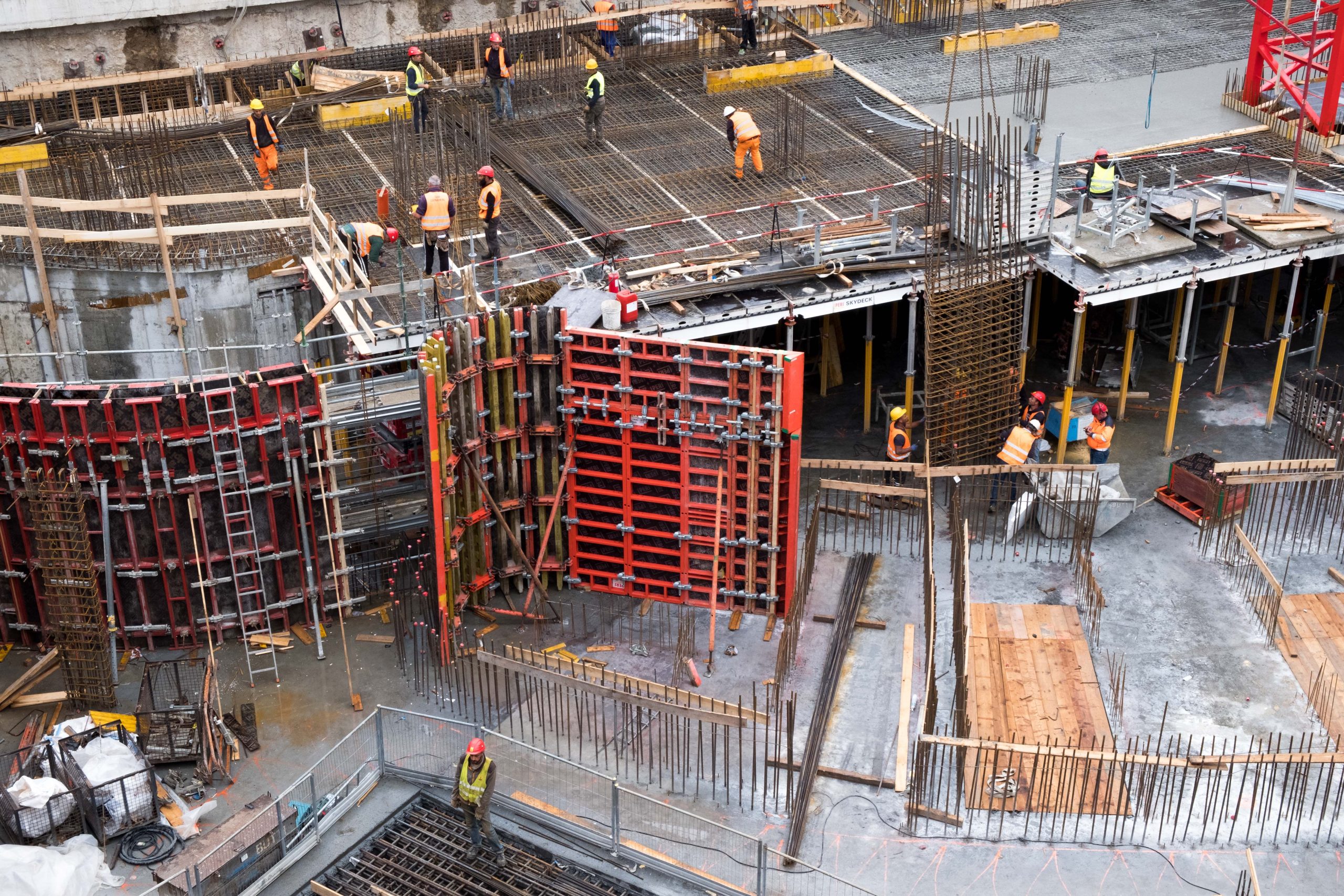
Construction crews completed the second steel truss arch at the future Athletics ballpark in Las Vegas this week, marking a major milestone in the project’s progress. The arch system is among the most visually distinctive structural elements of the ballpark design, giving the building its characteristic profile against the Strip skyline as it rises on the south end of Las Vegas Boulevard.
The Athletics ballpark represents one of the most consequential infrastructure investments in Las Vegas’s recent history, not because of its size relative to other Strip projects, but because of what it represents structurally: the first permanent MLB facility built in a tourist corridor anywhere in the country. The economics of professional baseball, 81 home games annually, average attendance that fills a stadium multiple times weekly across an entire spring and summer season, have never before been tested in a market whose primary attraction is something other than the local team.
The ballpark’s design specifically addresses the tourism dimension. Premium amenities, Strip-adjacent location, and the integration of Las Vegas’s casino and hospitality infrastructure into the gameday experience all reflect an attempt to convert tourists into baseball attendees rather than relying solely on local fan development. The second arch completion confirms that this experiment is on schedule for its planned opening, providing the first tangible visual evidence that a baseball stadium is actually rising on the Strip rather than existing only in renderings.
The construction jobs associated with the Athletics ballpark contribute to the broader employment picture that July’s data captured. Large-scale construction projects generate employment cascades that extend well beyond the crew members on site. Supply chain workers, materials manufacturers, engineering and design firms, and the service businesses that support construction workers all benefit from a major project of this kind.
Nevada’s Counter-Cyclical Employment Resilience
Nevada’s ability to generate positive employment data in months when national trends soften reflects a structural characteristic of the state’s economy that has been documented across multiple economic cycles. Las Vegas’s labor market doesn’t move in perfect lockstep with national employment trends because the hospitality and construction sectors that dominate its economy operate on different cycles than the technology, finance, and manufacturing sectors that drive national employment statistics.
When technology sector layoffs drive national employment softness, Las Vegas’s hotel workers, restaurant staff, and casino employees aren’t directly affected in the same way. When national construction slows due to interest rate pressures, Las Vegas’s construction pipeline, driven by projects that were committed before those pressures intensified, continues generating work even if new project starts slow.
This counter-cyclicality is a genuine structural advantage for the Las Vegas labor market, though it has limits. A deep and prolonged recession that reduces tourism substantially does eventually reach Las Vegas’s hospitality workforce, as the 2008-2009 period demonstrated. But short-term national employment softness, driven by sector-specific dynamics that don’t directly affect tourism demand, produces the kind of divergence visible in July’s data: Las Vegas adds jobs while national trends decline.
The labor force contraction that accompanied July’s job growth is worth noting separately. When a market adds jobs but the total labor force shrinks, it suggests that some workers are leaving the market entirely rather than seeking work. In Las Vegas, this can reflect seasonal patterns, the retirement of older workers who don’t immediately reenter the market, or the departure of workers who were commuting from other markets during periods of higher demand. The net employment picture remains positive even as the labor force dynamic bears watching.
The Construction Pipeline’s Employment Multiplier
Beyond the Athletics ballpark, Las Vegas’s construction employment is being driven by a pipeline of major projects that collectively represent the most significant transformation of the Strip’s physical landscape since the megaresort era of the 1990s.
Hard Rock Las Vegas’s Guitar Tower, now nearly clad in its blue glass exterior, has been operating on a 24/7 schedule that maximizes the labor hours generated by a single project. The TKO/UFC campus expansion announced last week will add construction employment when it moves from planning to groundbreaking. The Nevada Legislature’s allocation of funds for infrastructure projects supporting the NBA expansion bidding process, if materialized, would add another construction wave. And the various residential and commercial projects rising across the valley’s growing suburban corridors contribute a steady baseline of construction employment that Strip-focused analysis tends to undercount.
Each of these projects generates employment not just during construction but in the post-opening operational period that follows. Hard Rock Las Vegas’s 6,000 planned employees at opening represent a permanent employment addition to the market. The Athletics ballpark’s operations staff, concession workers, maintenance crews, and administrative personnel will similarly add permanent positions once the facility opens.
The compounding effect of multiple major projects in different phases of development simultaneously creates an employment multiplier that single-project analyses miss. Las Vegas in 2026 has projects in groundbreaking, mid-construction, and pre-opening phases all running concurrently, generating different categories of employment demand across the entire project lifecycle simultaneously.
The Hospitality Workforce and Acquisition Uncertainty
July’s positive job creation data arrived during a period when uncertainty about Caesars and MGM’s ownership transitions could theoretically be suppressing hospitality hiring. Companies undergoing acquisition tend to defer non-essential hiring while ownership transitions are negotiated and regulatory approvals are pursued. If Caesars and MGM are both in hiring deferral mode, July’s 2,300 net new jobs were generated almost entirely by other employers across the valley.
The Culinary Union represents tens of thousands of Las Vegas hospitality workers whose employment conditions will be shaped by however the Fertitta-Caesars and Diller-MGM transactions resolve. Their initial measured responses to both acquisition announcements, noting positive existing relationships without endorsing the deals, reflect sophisticated understanding that worker protections need to be negotiated as part of deal terms rather than assumed to carry over automatically from prior arrangements.
If both acquisitions close and new ownership proves to be expansion-minded rather than cost-cutting oriented, the longer-term employment picture for hospitality workers could improve from what acquisition uncertainty might suggest. Fertitta’s existing hospitality empire at Landry’s suggests familiarity with workforce management in a service business context. Diller’s People Inc. has less direct operational hospitality experience, making his workforce intentions less predictable from prior behavior.
The Colorado River Water Allocation
One significant development this week that affects Las Vegas’s long-term economic geography arrived in a form that rarely makes entertainment news: the federal government released finalized guidelines for how Colorado River water will be divided in 2027 and 2028.
Water allocation in the Colorado River basin is among the most consequential infrastructure and economic issues in Las Vegas’s long-term future. The city’s growth trajectory, its ability to support the residential development that underlies its construction employment, and its capacity to sustain the hospitality operations that generate its tourism economy all depend on water supply that is subject to allocation decisions made at the federal level among seven states with competing interests.
The 2027-2028 guidelines provide planning certainty for a period that overlaps with the opening of Hard Rock Las Vegas, the Athletics ballpark debut, and the earliest possible operation of an NBA expansion franchise. Developers, hoteliers, and municipal planners all need water allocation certainty to make binding commitments in those timeframes. The federal finalization of guidelines, whatever their specific content, provides that planning foundation even if the allocations themselves are contested.
Notes for Stakeholders
Las Vegas’s July employment data and concurrent construction milestones offer insights for anyone working in regional economic development, labor market analysis, or hospitality investment:
Counter-cyclical employment resilience in tourism-and-construction economies requires distinguishing structural insulation from permanent immunity. Las Vegas’s divergence from national employment softness in July reflects real structural differences, not immunity from eventual cyclical alignment.
Construction pipeline diversity across project types and phases generates more stable employment than dependence on any single major project. Multiple projects in different development phases simultaneously create employment demand across the project lifecycle that single-project analysis misses.
Acquisition uncertainty in major employers creates employment timing gaps that other sectors must fill to maintain positive net job creation. July’s positive result despite potential hiring deferrals at Caesars and MGM suggests that other employment sources are robust enough to cover that gap.
Water allocation certainty functions as enabling infrastructure for Las Vegas’s economic planning in ways that differ from other major metro areas. The finalization of Colorado River guidelines provides a planning foundation that Las Vegas’s growth trajectory requires regardless of the allocation’s specific content.
Professional sports stadium construction creates employment cascades beyond the construction workforce itself. Supply chains, engineering, design, and support services all contribute to the broader employment effect of a project like the Athletics ballpark.
What Next Month’s Data Will Show
August’s employment figures will arrive in September and will tell a different part of the story. August is historically Las Vegas’s slowest tourism month, with the post-summer shoulder period before convention season fully resumes. If Las Vegas maintains positive employment in August despite seasonal softness, the July result looks like a trend rather than a one-month anomaly.
The construction sector’s contribution to September’s numbers will reflect how many of the major projects currently in active development maintained or accelerated their workforce during August’s heat. The 24/7 schedule at Hard Rock Las Vegas operates year-round regardless of temperature, which means construction employment in that sector doesn’t follow the seasonal pattern that outdoor construction in more temperate markets experiences.
For a city building two steel arches on a baseball stadium, cladding a guitar-shaped hotel tower in blue glass, planning a 35-acre sports entertainment campus, and watching autonomous vehicles navigate Strip intersections, 2,300 jobs in July is a data point that fits the broader picture of a city whose economic ambitions are not waiting for national employment trends to improve before proceeding.
Key Takeaways:
- Las Vegas added 2,300 jobs in July 2026, helping Nevada buck national employment declines at a time when most major metros reported softening job creation
- Construction crews completed the second steel truss arch at the future Athletics ballpark this week, marking a significant milestone in the project rising on Las Vegas Boulevard’s south end
- Nevada’s counter-cyclical employment resilience reflects structural differences between Las Vegas’s hospitality and construction economy and the technology, finance, and manufacturing sectors driving national employment data
- The labor force contracted even as jobs were added in July, a pattern that can reflect seasonal dynamics, retirement, or departure of workers who entered the market during higher-demand periods
- Las Vegas’s construction pipeline includes Hard Rock Las Vegas on a 24/7 schedule, the Athletics ballpark, the TKO campus expansion planning, and multiple residential projects across valley suburbs running simultaneously
- Acquisition uncertainty at Caesars and MGM may be suppressing hospitality hiring during deal negotiation periods, meaning July’s positive results were likely driven primarily by other employers across the valley
- The federal government finalized Colorado River water allocation guidelines for 2027-2028 this week, providing planning certainty for a period that overlaps with multiple major Las Vegas project openings
- Hard Rock Las Vegas’s planned 6,000 employees at opening and the Athletics ballpark’s operational staff represent permanent employment additions that will register in future employment data beyond the construction phase
- Las Vegas’s employment engine is running across multiple project types, phases, and sectors simultaneously, creating a multiplier effect that individual project analyses tend to undercount
- August employment data arriving in September will indicate whether July’s counter-cyclical performance represents a sustained trend or a single-month divergence from national softness