

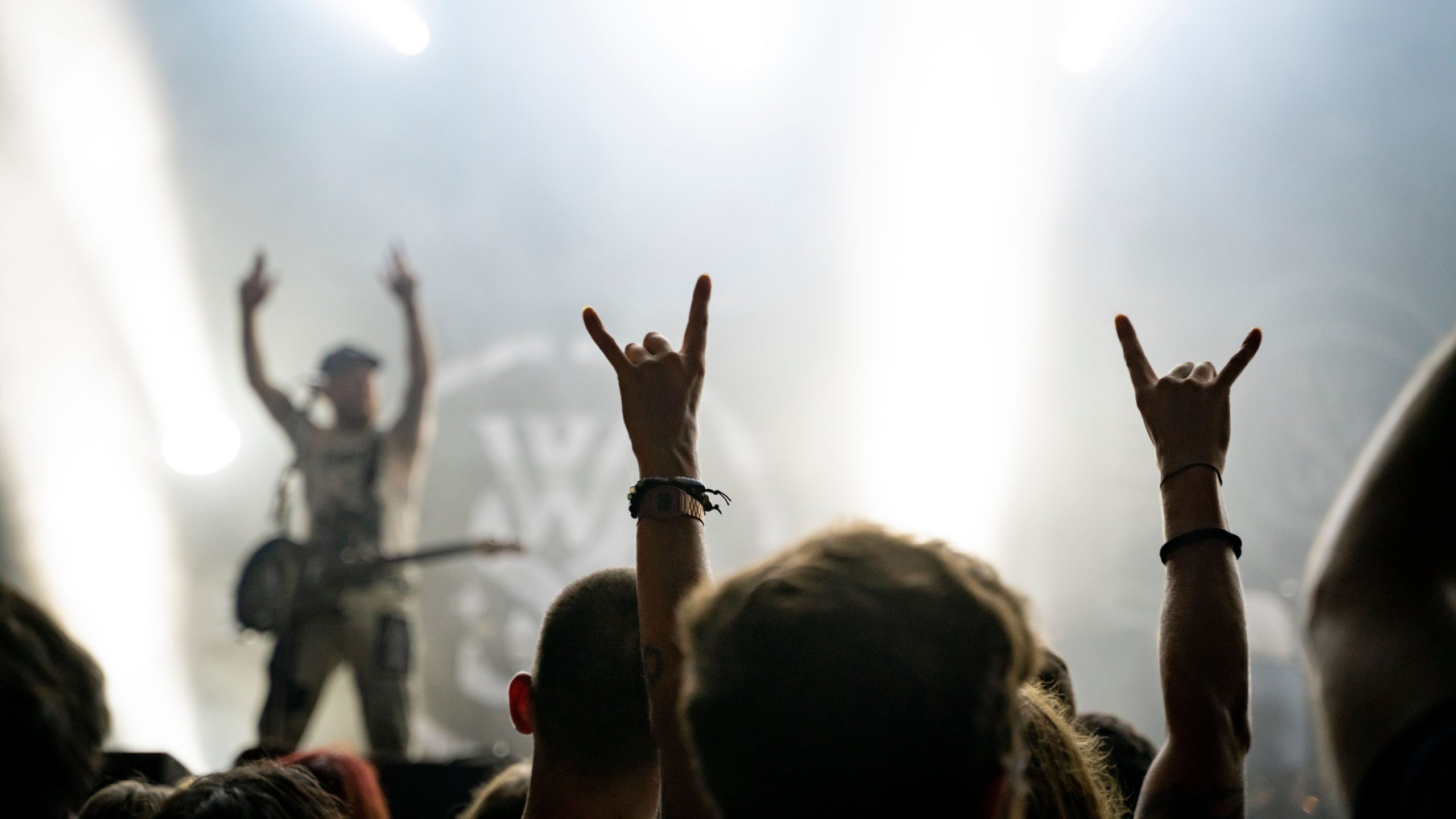
Saturday, August 1, 2026. Allegiant Stadium, Las Vegas. Seventy-one-year-old Angus Young sprints the full length of a catwalk in his schoolboy uniform as Hells Bells tolls across 65,000 people who have paid an average of $200 to be there. The Pretty Reckless, a band three decades younger, opened the show. The setlist covers five decades of catalog. And the sound coming off the stage, through an arena-grade PA system inside one of the most acoustically managed venues built in the last decade, is as loud and precise as it has ever been.
This is the Power Up Tour, AC/DC’s return to the road following their 2020 studio album of the same name. The Las Vegas date is one stop among dozens across North America. But Allegiant Stadium is not just a tour stop. It is the most recent proof point in a recurring Las Vegas question: why does stadium rock keep working here when conventional entertainment industry logic says arena shows compete for the same dollars as residencies and nightlife, and everyone should be fighting over a finite pie?
The answer, when examined carefully, reveals something important about how different entertainment markets actually function and why Las Vegas’s continued growth as a live entertainment destination has not cannibalized the economics of any individual category within it.
The Stadium Show as Distinct Category
AC/DC at Allegiant Stadium is not competing with the Backstreet Boys at Sphere. It is not competing with Boyz II Men at The Chelsea. And it is certainly not competing with a Saturday night at XS or Encore Beach Club. These are not interchangeable entertainment choices for the same guest on the same trip.
The guest who purchases a $200 AC/DC ticket is making a decision shaped by a specific relationship with a specific band’s catalog, a desire to experience stadium-scale rock performance, and a Las Vegas trip either planned around the show or augmented by it. That guest is not the same person who would otherwise have bought a Sphere ticket that weekend. They are different people from different geographic markets making different decisions.
This market segmentation is precisely why Las Vegas has been able to sustain simultaneous growth across stadium shows, residencies, nightclubs, dayclubs, immersive experiences, and wellness programming without obvious cannibalization. Each category has a distinct demand driver and a largely distinct customer, and Las Vegas’s infrastructure is large enough to absorb the total demand from all of these categories simultaneously.
Allegiant Stadium itself illustrates this point physically. The 65,000-seat venue was built primarily for NFL football and sits roughly a mile southwest of the Strip. Its capacity exceeds the total of most Strip entertainment venues combined. When a tour stop like AC/DC’s fills it, the additional tourism demand it generates flows through the entire city, filling hotel rooms, restaurants, casino floors, and nightclubs that benefit from the incremental visitor traffic without directly competing for it.
The Power Up Tour’s Commercial Architecture
AC/DC’s Power Up Tour represents the final touring chapter of a band that formed in 1973, has sold over 200 million albums worldwide, and holds the record for the best-selling album by any band with Back in Black’s 50 million copies. These are not statistics to provide context. They are the entire explanation for why the tour is viable at Allegiant Stadium pricing.
Tickets starting at $210 on the primary market and escalating through the secondary market reflect demand that is inelastic in the way we have observed throughout this series with other legacy acts. AC/DC fans who want to see the band perform live in 2026 are operating with the knowledge that opportunities are limited and diminishing. Angus Young is 71. The original lineup has already lost Malcolm Young, who died in 2017. These shows carry the weight of finality in ways that artists in their commercial prime do not, and that weight translates directly into willingness to pay prices that pure entertainment value calculations would not justify.
The support act choice also reveals deliberate thinking about audience expansion. The Pretty Reckless, fronted by Taylor Momsen, plays blues-influenced hard rock that connects to AC/DC’s musical DNA while bringing an audience demographic younger than AC/DC’s core fanbase. This cross-generational pairing serves both acts: AC/DC benefits from exposure to younger attendees, and The Pretty Reckless earns association with one of rock’s foundational acts.
The Power Up album itself, released in 2020, hit number one in 21 countries. A band releasing chart-topping music at this stage of their career is not coasting on nostalgia alone. The tour combines catalog performance, where the hits are the primary draw, with legitimate new-album support, which gives long-term fans something current to attach to alongside the familiar material.
Allegiant Stadium as the Right Venue
Allegiant Stadium’s enclosed design, climate control, and Las Vegas’s lack of competing outdoor venue options at comparable capacity make it the obvious choice for stadium-scale touring acts visiting the market. This seems self-evident, but it carries strategic implications for how Las Vegas has positioned itself in the touring industry.
Before Allegiant opened in 2020, Las Vegas lacked a proper NFL-caliber stadium for touring purposes. Major tours that could fill 65,000 seats had limited options in the market, and Las Vegas frequently did not appear on North American stadium tour itineraries as a result. This was a genuine gap in the city’s entertainment infrastructure.
The stadium’s existence has transformed Las Vegas from a market that stadium tours could skip without significant loss to one that tours genuinely want to include. The combination of destination tourism, high-spending visitors, and the entertainment ecosystem surrounding the venue creates a Las Vegas show experience that differs from playing a comparable stadium in a non-tourism market.
A band like AC/DC playing Houston, for example, draws primarily from the Houston metropolitan area and regional drive markets. AC/DC playing Las Vegas draws from that same regional base but adds a national and international tourist overlay of visitors who specifically extended their Las Vegas trip to attend the show, or planned the trip specifically around the show. This expanded geographic demand base supports higher average ticket prices and stronger overall gross than comparable markets.
The Allegiant management’s own communications reinforce this understanding. The venue’s heat advisories for the August 1 show, noting the 15 to 20 minute walk from the Strip in extreme temperatures and recommending lightweight clothing and sunscreen, reflect operational experience managing large crowds in desert heat while also confirming that a significant portion of AC/DC’s Las Vegas audience is arriving from Strip hotels rather than purely from local residences.
The Nightlife Afterburn Effect
What happens in Las Vegas after AC/DC ends at approximately 10:30 p.m. on August 1 is worth examining as a secondary economic story. Sixty-five thousand people, energized by two hours of stadium rock, disperse into a city with the nightlife infrastructure to absorb all of them.
Strip nightclubs that happen to be booking strong talent on the same weekend benefit from incremental demand that would not exist without the AC/DC show drawing additional visitors to the city. Restaurants along the Strip see elevated late-night demand. Casino floors register incremental traffic from concert-goers who have money to spend and energy to burn.
This afterburn effect is part of what makes stadium shows economically valuable to Las Vegas beyond the direct revenue from ticket sales. The $200 average ticket price captures the value the city creates for the touring industry. The secondary spending across hotel, food, beverage, gaming, and nightlife captures additional value that does not appear in concert revenue metrics but is very real to the properties benefiting from it.
Quantifying this secondary spend is difficult, but the pattern is consistent enough across major Las Vegas events to be considered a structural feature of how the entertainment economy works. Formula 1 on the Strip, the Raiders’ home games at Allegiant, major boxing and UFC cards at T-Mobile Arena, Sphere residencies, and stadium tours all generate secondary economic activity that multiplies the direct event revenue by a factor that city tourism economists have been studying with increasing precision.
The Age Question and What It Does Not Mean
Industry observers who note that Angus Young is 71 and wonder how many more Power Up Tour iterations are possible are raising a real question but drawing the wrong conclusion from it. The same question could have been asked about the Rolling Stones in 2005, when Mick Jagger was 61 and Keith Richards was 62. They have played stadium tours in every subsequent decade.
The relevant observation is not that aging rock musicians eventually stop touring, which is true, but that the financial incentives to keep touring escalate rather than diminish as the end of a career approaches. Every subsequent tour carries the implicit premium of finality that we examined with nostalgia pricing throughout this series. Fans who have been waiting for the right opportunity to see AC/DC live are increasingly motivated to act by the understanding that the window is closing.
This dynamic means that AC/DC’s final few tours, whenever they occur, are likely to be their highest-grossing. The pricing power that comes with genuine scarcity of remaining opportunities is the same force driving the Backstreet Boys’ progressive summer extension at Sphere and the sustained premiums on Rolling Stones tickets in their eighth decade. Rarity, in live entertainment as in most markets, commands a price.
For Las Vegas specifically, this means stadium rock from legacy acts will likely remain a viable and lucrative entertainment category for longer than pessimistic forecasts about aging audiences suggest. The audience for AC/DC at Allegiant Stadium spans genuinely wide age ranges: core fans who bought Back in Black in 1980, younger fans who discovered the catalog through streaming and video games, and casual attendees who simply want the experience of seeing one of history’s most successful rock bands perform at full power. That breadth sustains demand across demographic transitions in ways that more narrowly targeted programming cannot.
Key Insights
Stadium-scale touring shows occupy a distinct demand category from residency, nightclub, and immersive entertainment programming, drawing largely non-overlapping audiences whose Las Vegas trips are structured around the specific concert rather than generic entertainment consumption. Allegiant Stadium’s enclosed climate-controlled design and 65,000-seat capacity transformed Las Vegas from a market stadium tours could skip to a destination city tours genuinely target, expanding the city’s overall entertainment revenue without directly competing with existing categories.
Legacy act pricing inelasticity reflects genuine consumer motivation based on perceived finality and scarcity of remaining opportunities rather than pure entertainment value calculation, supporting premium ticket prices that new artist tours at comparable venues cannot achieve. Afterburn secondary spending across hotel, dining, gaming, and nightlife from stadium show audiences represents substantial economic value to the city beyond direct ticket revenue that does not appear in concert-specific metrics. Cross-generational support act selection, The Pretty Reckless opening for AC/DC, serves dual purposes of exposing younger demographics to the headliner and associating the opener with rock’s foundational acts, extending both artists’ commercial reach simultaneously.
Notes for the Touring Industry
The Las Vegas market’s evolution into a genuine stadium touring destination over the six years since Allegiant opened deserves more systematic analysis than it has received. The combination of destination tourism demand, high-spending visitor demographics, enclosed climate-controlled infrastructure, and the secondary entertainment ecosystem that multiplies the value of every tour stop creates a market profile that differs structurally from most other North American stadium markets.
Touring companies that treat Las Vegas as simply another stop on a market-by-market tour strategy are potentially leaving revenue on the table that market-specific optimization would capture. The opportunity to build show-specific experiences around a Las Vegas date, connecting the concert to the broader entertainment ecosystem through venue partnerships, hotel packages, and nightlife integrations of the kind we have seen with Sphere and The Venetian, represents a differentiation strategy that most touring acts have not yet fully exploited.
The AC/DC show on August 1 generates approximately $13 million in direct ticket revenue at average prices. The total economic impact on Las Vegas, including hotel stays, dining, gaming, and secondary entertainment spending from attendees who traveled specifically for the show or extended their trips around it, likely multiplies that figure several times over. Capturing more of that multiplied value through deeper integration between touring shows and the Las Vegas entertainment ecosystem is one of the more interesting underdeveloped opportunities in the market.