


Two Economies, One City
On any given night, the Las Vegas Strip generates millions of dollars in revenue across its casinos, restaurants, and entertainment venues. The same night, a few miles east and west of those neon towers, small grocery store owners are calculating whether they can make payroll, pay rent, and keep their doors open another week.
These two economies have always coexisted in Las Vegas. What’s changed since May 1, 2026, is the speed and severity with which federal SNAP policy changes have hit the second one. Mario Berlanga, owner of Mario’s Westside Market, said sales are down 30% compared to last year. “I think we’re just in a world of trouble right now,” Berlanga said. His store has operated for 27 years. The drop in sales has forced him to cut staff and shorten store hours. “Over 20 people have lost their job because there’s just no business,” he said.
On the Eastside, owners are describing nearly identical conditions. One Eastside store owner told reporters that the SNAP cuts had affected more than half of his shoppers. The Aftermarket, a hybrid grocery store and food pantry near Lake Mead and Nellis Boulevard, has signed up approximately 2,800 families since the new requirements took effect in May as demand for free groceries surges while retail grocery revenue collapses simultaneously. These two trends, surging pantry demand and collapsing retail revenue, are two sides of the same policy change hitting the same community at the same time.
What Changed on May 1
The mechanism behind the grocery store crisis is specific and traceable to a single federal policy shift. As part of changes in the Big Beautiful Bill, starting May 1, Nevadans who are “Able-Bodied Adults Without Dependents” must complete 20 hours of work, on-the-job training, or community service per week to maintain SNAP eligibility. State officials estimate 27,000 people lost their SNAP benefits for food stamps on May 1 due to these new work or volunteer requirements.
The average Nevadan received $193 a month in SNAP benefits for groceries, state officials said during a late April hearing. Multiply that by 27,000 people and you get roughly $5.2 million per month that stopped flowing through Nevada’s grocery system on a single day. That money didn’t redistribute to other grocery categories. It disappeared from the food economy entirely for the households that lost eligibility.
The policy’s design assumes that people who lose benefits will either find 20 hours of qualifying work or volunteer activity, or find other means to purchase food. In practice, the transition is rarely that clean. People who were already food-insecure before May 1 don’t suddenly find stable qualifying work because a policy deadline arrives. They reduce food purchases, skip meals, rely on food banks, or stretch smaller budgets across the same family needs that $193 monthly was previously helping to cover.
Berlanga said customers are panicking over how to feed their families. “When you’re used to feeding your family of four or five with $200 and now you have to do it with $80 — you really watch and see what you can pick up,” he said. “You can tell that everybody’s panicking, and that’s what everybody’s talking about is how they’re going to feed their families.”
The Neighborhood Grocery Store’s Structural Vulnerability
Understanding why small Eastside and Westside grocery stores are absorbing this shock more severely than large supermarket chains requires understanding their customer composition and business model.
Large grocery chains like Walmart, Smith’s, and Albertsons serve customer bases that span multiple income levels and neighborhoods. SNAP recipients represent a meaningful but not dominant share of their total customer traffic. A 10% to 15% reduction in SNAP-dependent purchasing power affects their revenue but doesn’t threaten viability because non-SNAP customers continue purchasing at normal levels.
Small neighborhood grocery stores in lower-income Las Vegas corridors operate with fundamentally different customer compositions. Stores like Mario’s Westside Market exist specifically to serve communities that larger chains have underinvested in. Their customer bases skew heavily toward working-class and lower-income households, and within those households, SNAP participation rates are substantially higher than the general population average. When a policy change eliminates benefits for 27,000 Nevadans concentrated in exactly these communities, neighborhood stores lose a disproportionate share of their revenue almost immediately.
The cascading effects compound quickly. Reduced revenue forces reduced staffing, which reduces operating hours, which makes the store less convenient for customers who do have purchasing power, which reduces revenue further. Road construction near Mario’s Westside Market is making it harder for customers to get in and out, compounding the impact of reduced SNAP benefits. The intersection of federal policy and local infrastructure creates a double constraint that the store’s owner is navigating simultaneously with no buffer.
The Aftermarket Model Under Stress
The Aftermarket, founded by Pastor DeWayne McCoy near Lake Mead and Nellis Boulevard, represents a specific institutional response to Las Vegas’s food insecurity landscape that predates the May 2026 SNAP changes but is now being tested at unprecedented scale by them.
The store operates as a hybrid model: part retail grocery, part food pantry, serving customers who can pay alongside customers who cannot. This design allows the retail revenue to cross-subsidize the pantry operation, maintaining dignity for all customers regardless of their ability to pay. The model depends on retail revenue remaining sufficient to support the pantry side.
The Aftermarket is seeing unprecedented demand as changes to SNAP and rising living costs leave more families and seniors struggling to afford food. Since the new requirements took effect in May, founder Pastor DeWayne McCoy has signed up approximately 2,800 families for pantry services. That volume of new pantry demand arriving simultaneously with declining retail revenue from SNAP-eligible customers who can no longer afford to shop threatens the cross-subsidy model that makes the Aftermarket viable.
Three Square Food Bank, Las Vegas’s largest food bank operation, is experiencing parallel pressure. The same policy change that’s driving families to the Aftermarket is driving them to Three Square, while the donor and grant base that funds food bank operations doesn’t automatically expand to match sudden surges in demand. Food banks aren’t infinitely scalable on short timelines, and the May 1 policy change created a demand surge on a timeline that outpaces normal food bank capacity expansion.
Nevada’s Compliance Tightrope
Nevada’s relationship with federal SNAP administration adds another dimension to the local impact story. Nevada has been navigating a high payment error rate that threatened to shift administrative costs from the federal government to the state. Kelly Cantrelle, a deputy administrator for Nevada Social Services, said the state is currently tracking below 6% this fiscal year. “We’re cautiously optimistic that we’re going to remain under the 6 percent error rate. What I can say is this time last year, we were over 7 percent,” Cantrelle said.
This compliance context explains why Nevada’s implementation of the new work requirements, even amid visible harm to small businesses and food security, has proceeded without the kind of waivers or delays some states have applied for. The state’s administrative machinery has been focused on reducing error rates under federal pressure, and implementing the new requirements as written is part of that compliance posture.
The policy tension here is genuine: the same administrative rigor that reduces error rates and maintains federal cost-sharing also enforces eligibility changes that are demonstrably harming small businesses and food-insecure households in real time. These aren’t contradictory goals from a policy design perspective, but they produce contradictory outcomes at the community level.
The Compounding Pressure Stack
Mario Berlanga’s situation at Mario’s Westside Market illustrates how the SNAP policy change doesn’t arrive in isolation. It lands on top of other pressures that were already straining the business before May 1.
Inflation in food supply costs has compressed grocery margins across the industry over the past several years, with small operators least able to absorb those costs through volume or private-label products the way large chains can. Berlanga said much of his day is now spent on the phone with vendors, negotiating to bring grocery prices down as low as possible. This is the daily operational reality of a small grocery operator trying to serve price-sensitive customers while managing supply chains that have been volatile since 2020.
The road construction compounding the customer access problem isn’t something Berlanga can control or predict. Infrastructure investment that improves the neighborhood in the long run creates short-term business disruption that small operators with thin margins cannot easily weather. A large chain can absorb months of reduced traffic from construction inconvenience. A neighborhood store operating at 70% of its normal revenue due to SNAP changes doesn’t have that buffer when construction simultaneously reduces the traffic from customers who do have purchasing power.
What Feeds the People Who Feed the City
Las Vegas’s hospitality and tourism economy depends on a workforce that is disproportionately drawn from the same communities being hit hardest by the SNAP changes. Hotel housekeepers, casino floor workers, restaurant kitchen staff, and hospitality support workers live in significant numbers on the Eastside and Westside neighborhoods where Mario’s Westside Market and similar stores have operated for decades.
These workers feed their families partly through SNAP benefits that supplement wages in an industry where tips and shift differentials create income variability that fixed monthly benefit amounts help smooth. A hotel housekeeper whose household SNAP benefits dropped from $193 to something lower because a family member lost eligibility under the new work requirements is the same worker whose consistent, reliable labor keeps Las Vegas’s visitor-facing economy functioning.
This connection between federal food policy and tourism workforce stability isn’t typically part of the SNAP policy debate at the national level, where discussions center on work incentives and program costs. At the local level in Las Vegas, where the policy change is visible in empty grocery store shelves and shuttered employee hours, the connection is concrete and immediate.
Notes for Stakeholders
The SNAP changes’ impact on Las Vegas’s Eastside and Westside grocery stores offers insights for anyone working in community economic development, retail food access, or workforce policy:
Small neighborhood grocery stores carry disproportionate exposure to SNAP policy changes due to concentrated customer base demographics. A policy change affecting 27,000 Nevadans hits neighborhood stores serving those communities far harder than large chain retailers with diversified customer compositions.
Hybrid grocery-pantry models face simultaneous pressure on both sides when food insecurity surges. Retail revenue declines at the same time pantry demand increases, threatening the cross-subsidy model that makes operations viable.
Policy changes with fixed implementation dates create demand surges that community infrastructure struggles to absorb on short timelines. Food banks, pantries, and alternative food sources cannot scale as quickly as eligibility changes eliminate benefits.
Compounding pressures, policy changes alongside construction disruption and supply cost inflation, exceed the buffer capacity of thin-margin small businesses. Any one of these pressures might be manageable alone. The simultaneous combination can cross the viability threshold.
Tourism-dependent workforce food security connects federal food policy to industry labor stability in ways regional economic analysis rarely captures. Las Vegas’s hospitality workforce stability has a direct relationship to the food access conditions in the neighborhoods where those workers live.
The 27-Year Store
Mario Berlanga has operated his Westside Market for 27 years. Through recessions, through the 2008-2009 financial crisis that devastated Nevada more than almost any other state, through the COVID pandemic and its forced closures, through all of the turbulence that Las Vegas’s economy has experienced across a quarter century, the store stayed open.
“He said he’s never seen anything like this in the 27 years of the shop’s existence.” That statement from a man who has navigated every economic disruption Las Vegas has experienced in recent decades should carry real weight. The SNAP changes that took effect May 1 produced something his 27 years of operational experience hadn’t prepared him for.
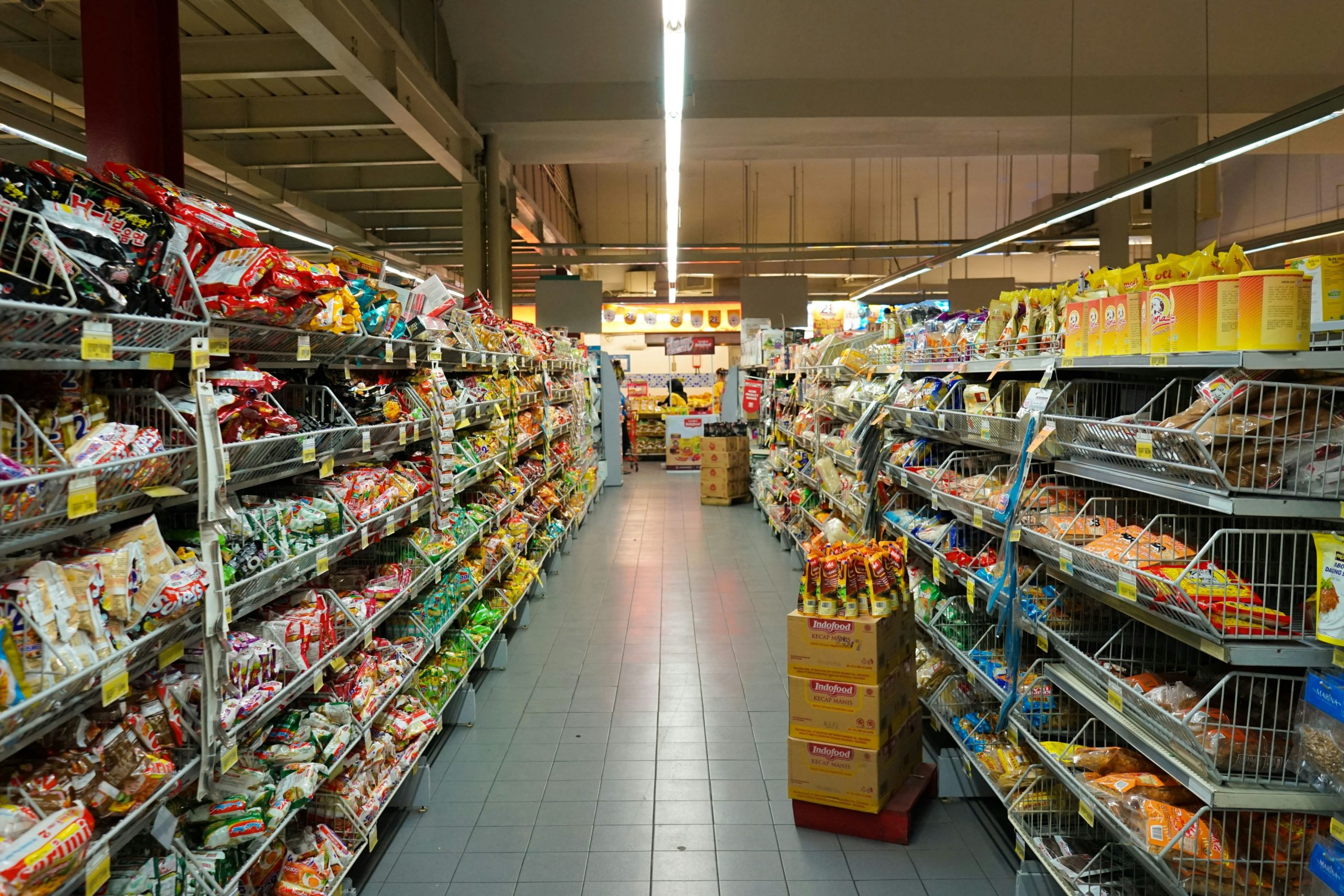
Over a thousand miles away in Washington, the policy was designed, debated, and enacted. On the Westside of Las Vegas, its effects arrived in the form of empty aisles, fewer employees, shorter hours, and a owner spending his days on the phone with vendors trying to negotiate margins thin enough to survive.
The neon on the Strip keeps burning. The lights in some neighborhood grocery stores may not stay on much longer.
Key Takeaways:
- Small grocery markets on Las Vegas’s Eastside and Westside are reporting sales declines of 30% or more since federal SNAP work requirements took effect May 1, 2026, as part of the Big Beautiful Bill
- Mario Berlanga, owner of Mario’s Westside Market, said over 20 employees have lost their jobs and the store has reduced hours due to collapsed sales, calling the situation unprecedented in 27 years of operation
- An estimated 27,000 Nevadans lost SNAP benefits on May 1 under new requirements that able-bodied adults without dependents complete 20 hours weekly of work, job training, or community service
- The average Nevada SNAP recipient received $193 per month, meaning the policy change removed roughly $5.2 million monthly from the state’s food economy on a single day
- The Aftermarket, a hybrid grocery store and food pantry near Lake Mead and Nellis Boulevard, has signed up approximately 2,800 new families for free food services since May
- Small neighborhood grocery stores serving lower-income communities bear disproportionate impact because SNAP recipients represent a far higher share of their customer base than at large chain retailers
- Three Square Food Bank and other charitable food organizations are simultaneously absorbing surging demand that their capacity wasn’t built to handle on short timelines
- Nevada is navigating a compliance tightrope: implementing new eligibility rules as written while managing a payment error rate that must stay below 6% to avoid shifting federal administrative costs to the state
- Road construction near Mario’s Westside Market compounds the SNAP impact by reducing physical customer access for the non-SNAP shoppers who remain
- The affected workforce communities overlap substantially with Las Vegas’s hospitality labor pool, connecting federal food policy to the tourism industry’s workforce stability in ways rarely captured in policy analysis