


The Las Vegas steakhouse is one of the most entrenched categories in the city’s dining ecosystem. SW Steakhouse at Wynn. CUT at the Palazzo. Bazaar Meat at Sahara. Old Homestead at Caesars. Delmonico at The Venetian. The list of premium steakhouses on the Strip is long, fiercely competitive, and resistant to reinvention in ways that few other dining categories match. When something works as reliably and lucratively as a premium Las Vegas steakhouse, the incentives to deviate are minimal.
Momofuku Las Vegas has never been a steakhouse. Since opening inside the Cosmopolitan in 2016, David Chang’s flagship western outpost has operated as something harder to categorize, a constantly evolving menu drawing from American, Korean, and Japanese traditions, served in a contemporary setting that resists the formal trappings of traditional fine dining while maintaining ambitious culinary standards and premium pricing. The restaurant has built a devoted following among serious Las Vegas diners precisely because it defies easy categorization.
The launch of “All In at the Chef’s Counter” this month represents Momofuku Las Vegas doing something genuinely unexpected: engaging directly with the steakhouse category, not by becoming a steakhouse, but by reimagining steakhouse classics through the restaurant’s specific culinary vocabulary. The result is an eight-course tasting experience that takes Las Vegas dining’s most established format and runs it through the Momofuku lens, creating something that neither a traditional steakhouse nor a conventional tasting menu has previously attempted in this market.
Understanding what All In actually offers, why Momofuku chose this particular moment to launch it, and what it signals about where Las Vegas fine dining is heading requires examining the concept closely and placing it within the broader context of the restaurant’s decade-long Strip presence.
The Steakhouse Deconstruction
Traditional Las Vegas steakhouses follow a format so established it functions almost as a template. Premium beef, cooked to specification. Classic sides, often portioned for sharing. Strong wine lists anchored to Napa Cabernet and Bordeaux. Service that emphasizes formality and table-side presentation. The ingredients vary in quality and the design ranges from classic wood-paneled masculine to contemporary glass-and-steel, but the fundamental experience remains remarkably consistent across dozens of properties.
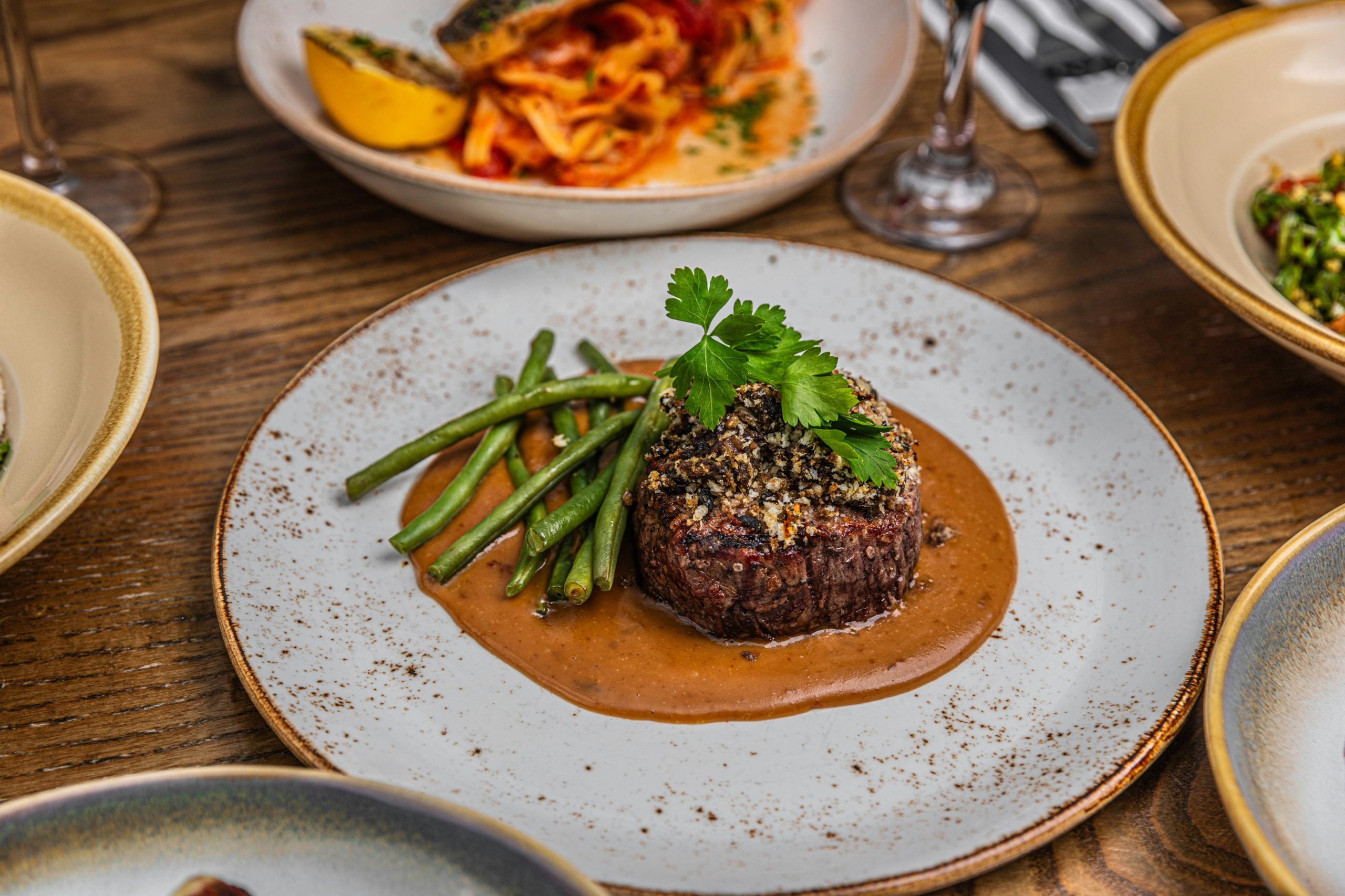
Momofuku’s All In at the Chef’s Counter takes the steakhouse template as a starting point and then systematically remakes every element through the kitchen’s existing culinary priorities. The premium beef is still present. Chef Harrison Ono plates Aussie 8-9 Wagyu with Robuchon Pommes as one of the menu’s centerpieces, a pairing that nods directly at the steakhouse tradition of premium beef accompanied by perfectly prepared potatoes while executing both elements with a precision that reflects fine dining rather than steakhouse convention.
But surrounding this anchor course is an eight-course architecture that builds toward the beef through courses that no traditional steakhouse would recognize as its own. The Korean and Japanese influences that define Momofuku’s broader menu don’t disappear for the tasting experience. They shape how each course arrives, how flavors build across the progression, and what the overall narrative of the meal communicates about the steakhouse format itself.
This deconstruction strategy has genuine culinary precedent. The world’s most celebrated tasting menus have long engaged with familiar formats and categories by taking their essential elements and reconsidering them through different cultural or technical lenses. What makes the Momofuku approach interesting in the Las Vegas context specifically is that it’s engaging with the city’s own most iconic dining format rather than importing an external culinary tradition and presenting it as revelation.
The Chef’s Counter Format
The decision to deliver All In through a chef’s counter experience rather than within the standard Momofuku dining room creates specific dynamics that shape both the quality of the experience and the business model supporting it.
Chef’s counter seating, where guests sit at a counter directly facing the kitchen rather than at traditional dining tables, creates intimacy and interaction that regular restaurant seating rarely generates. Chefs can explain courses as they’re being prepared and plated. Diners can observe techniques that would otherwise happen invisibly in the kitchen. And the physical proximity creates a shared focus, everyone watching the same preparations simultaneously, that builds a sense of occasion distinct from the more individualized experience of table-service dining.
For a tasting menu built around reimagining steakhouse classics, the chef’s counter format serves the narrative particularly well. When a course arrives at a counter seat and the chef explains how a specific element connects to or departs from its steakhouse reference, the guest receives both the food and the context simultaneously, which deepens engagement with the concept in ways that a written menu description or tableside server explanation rarely achieves.
The counter format also manages volume in ways that support the quality and consistency that ambitious tasting menus require. A chef’s counter typically seats fewer guests than a full dining room, which means the kitchen can maintain intensive attention to each course and each plate without the scale challenges that come with serving the same elaborate tasting menu across dozens of tables simultaneously. Momofuku Las Vegas’s existing reputation for high-volume execution in its main dining room means the restaurant can run All In at the counter while simultaneously operating its regular menu service, which requires a kitchen team with exceptional range and discipline.
Seasonal and Indulgent Ingredients
The chef’s counter experience guides guests through an eight-course menu featuring indulgent and seasonal ingredients, according to Momofuku’s own description. This language, specifically the combination of indulgent and seasonal, captures something important about how the tasting experience positions itself relative to traditional steakhouse values.
Traditional Las Vegas steakhouses emphasize indulgence almost exclusively, with seasonal considerations rarely shaping menus that rely on consistent, year-round premium beef programs. The quality of the beef is paramount and the supporting ingredients exist primarily to complement rather than express independent seasonality. Wagyu is wagyu whether it’s January or July.
The All In menu’s emphasis on seasonality alongside indulgence suggests a tasting experience where non-beef courses change with ingredient availability rather than remaining static. This creates both a different dining dynamic than steakhouses offer and a genuine reason for repeat visits among the serious diners who follow tasting menus specifically to track how seasonal ingredients shape evolving menus.
The indulgence commitment ensures the experience doesn’t feel like a corrective to steakhouse excess. Momofuku isn’t positioning All In as a lighter, more virtuous alternative to the steakhouse format. The Wagyu with Robuchon Pommes signals clearly that the kitchen is engaging with premium ingredients at steakhouse caliber rather than substituting refinement for richness. The seasonal element adds a dimension rather than replacing an existing one.
The Cosmopolitan Context
Momofuku Las Vegas’s position within the Cosmopolitan creates interesting dynamics for All In that differ from how the same concept would function at another Strip property. The Cosmopolitan has cultivated a reputation as one of the Strip’s most culinarily ambitious properties, housing concepts including Zuma, Wicked Spoon, and other restaurants that collectively establish serious dining expectations for guests from the moment they check in.
Within this environment, Momofuku’s chef’s counter experience doesn’t need to prove that serious tasting menu dining belongs in this building. The property’s existing culinary identity does that work in advance. What All In needs to establish is specifically why the Momofuku lens on steakhouse classics justifies the premium pricing and the advance booking commitment that chef’s counter tasting menus require from guests.
The answer, for food-focused travelers who plan Las Vegas dining itineraries around specific experiences rather than simply picking the nearest available table, is that All In offers something genuinely unavailable elsewhere in the city. Every serious steakhouse on the Strip can provide exceptional beef and classic accompaniments. No other kitchen is applying Momofuku’s specific combination of Korean and Japanese culinary vocabulary to the steakhouse tradition within a chef’s counter format that allows direct engagement with how the courses are being constructed.
This distinctiveness serves the restaurant’s competitive position particularly well during a period when Las Vegas dining has seen an unprecedented wave of ambitious new openings. The Michelin guide’s continued engagement with the city, the James Beard recognition that Casa Playa just received, and the arrival of concepts like Gymkhana, Cantina Contramar, and Sartiano’s Italian Steakhouse all raise the competitive standard. Momofuku’s response, rather than simply maintaining an excellent existing menu, is to create a new format that only this specific kitchen can deliver.
The David Chang Legacy in Las Vegas
All In’s launch comes a decade into Momofuku’s Las Vegas presence, at a moment when the restaurant has had time to establish genuine local credibility rather than simply operating on the celebrity chef reputation that accompanied its 2016 opening. A decade is long enough for a Las Vegas restaurant to move from novelty to institution, to develop the loyal repeat customer base that sustains ambitious programming beyond initial curiosity.
Chang’s influence on American dining broadly, from his early noodle bar work in New York through the culinary media empire he built across television, podcasting, and publishing, has always been oriented toward questioning established categories rather than simply executing within them. The Momofuku approach to Japanese ramen, Korean bo ssam, and American comfort food has consistently involved taking familiar formats and asking what they look like when subjected to serious technique and cross-cultural thinking.
All In at the Chef’s Counter represents this same instinct applied to the most specifically Las Vegas dining format imaginable. It’s not Chang asking what the steakhouse looks like through a global lens, which any skilled chef could attempt. It’s asking what the Las Vegas steakhouse specifically looks like through a decade of Momofuku Las Vegas’s accumulated understanding of this city, this market, and these diners. That specificity makes the concept worth examining beyond its immediate novelty.
Notes and Key Takeaways
For Restaurant Operators:
Momofuku Las Vegas’s All In concept demonstrates how established restaurants can create new premium experiences within existing footprints rather than requiring entirely new concepts or physical spaces. The chef’s counter format allows for differentiated pricing and experience quality without the capital investment of a separate restaurant build-out.
For Diners:
All In at the Chef’s Counter offers a genuinely novel Las Vegas dining experience, an eight-course tasting menu engaging directly with steakhouse classics through Momofuku’s Korean and Japanese culinary vocabulary, delivered through chef’s counter seating that creates interaction and intimacy unavailable in the main dining room. Advance reservations through OpenTable are available 60 days out.
For Las Vegas:
The launch of All In signals that Momofuku Las Vegas, after a decade of Strip presence, is entering a more ambitious phase of programming that treats its accumulated local credibility as a platform for genuinely experimental dining concepts. This evolution, from respected newcomer to confident institution willing to take interpretive risks with the city’s own most beloved dining format, represents genuine culinary maturity.
Important Insights:
The timing of All In’s launch, occurring within weeks of Casa Playa’s James Beard win and amid an unprecedented wave of ambitious new Las Vegas openings, suggests the kitchen is aware that maintaining competitive position in a rapidly improving market requires more than sustaining existing excellence. Creating new experiences that only Momofuku Las Vegas can deliver is a specific competitive strategy.
The eight-course structure positions All In within the tasting menu category rather than the steakhouse category, which means it competes for a different kind of reservation than traditional steakhouses capture. Guests booking All In are typically planning the experience weeks in advance and treating it as a specific destination rather than an impulse decision. This advance commitment creates different revenue predictability than walk-in or same-week steakhouse bookings typically provide.
Wagyu with Robuchon Pommes as the menu’s anchor course is a deliberate choice that communicates clearly to guests familiar with either reference. Robuchon’s pommes puree is one of the most celebrated potato preparations in contemporary fine dining, known for the exceptional butter ratio that makes it simultaneously controversial and irresistible. Pairing this with Wagyu creates a course that rewards culinary knowledge without excluding guests unfamiliar with either reference.
The seasonal ingredient emphasis creates ongoing menu development requirements that distinguish All In from static tasting menus. This requires sustained kitchen creativity rather than perfecting a fixed set of courses, which is demanding operationally but produces the evolving menu that gives repeat visitors genuine reason to return rather than having already experienced everything the experience offers.
Momofuku Las Vegas’s position within the Cosmopolitan, a property whose culinary identity has been carefully cultivated over more than a decade, means All In benefits from the property’s existing reputation among food-focused travelers who book the Cosmopolitan specifically because of its dining portfolio. This built-in awareness reduces the marketing challenge compared to launching a similar concept within a property with a weaker culinary reputation.
The chef’s counter format inherently limits the number of covers the experience can serve, which creates scarcity that supports premium pricing. This scarcity also means All In’s success depends on conversion among guests already aware of and interested in Momofuku rather than primarily on attracting entirely new customers to the restaurant.