



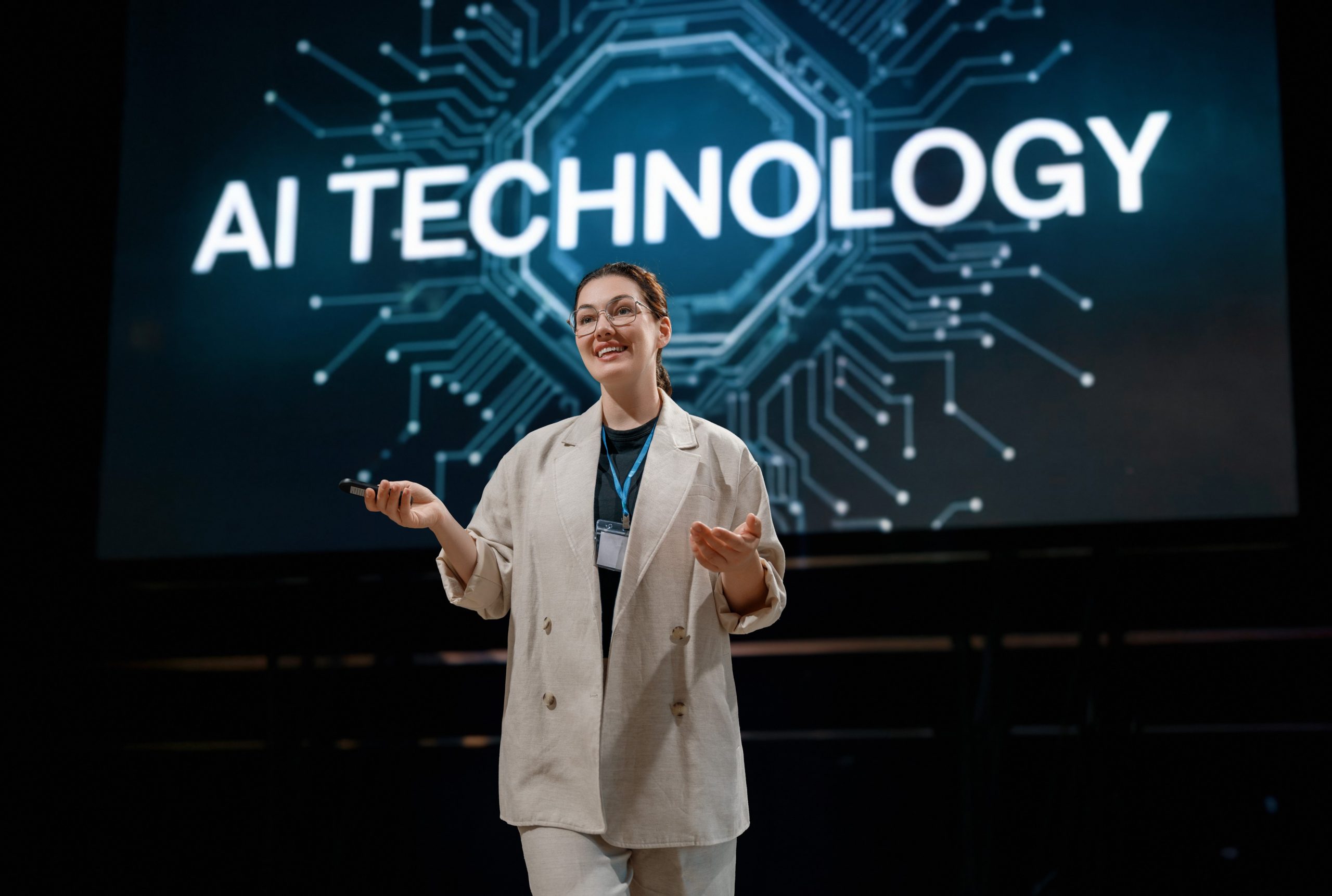
This week, the Bellagio Hotel and Casino is hosting something more urgent than most Las Vegas conferences. Info-Tech LIVE 2026, running June 9-11, 2026, brought together thousands of CIOs and senior IT leaders at a moment when the pressure to prove AI’s real enterprise value has become impossible to ignore.
The theme says it plainly: “Agentic AI: From Hype to Value.” No softening. No corporate euphemisms. Just a direct acknowledgment that the industry spent two years building excitement and now needs to show results.
Info-Tech Research Group, which serves over 30,000 IT, HR, and marketing professionals globally, chose The Bellagio deliberately. The venue signals seriousness. This isn’t a startup showcase or a vendor carnival. It’s a working conference for people who have to go back to their organizations Monday morning and explain why their AI budget is justified.
A Decision Point the Industry Can’t Avoid
Info-Tech announced the event in February 2026 with language that cut through the usual conference marketing: “As organizations move AI initiatives from experimentation into core enterprise operations, the three-day conference will examine how agentic AI is being adopted across IT and business functions and how CIOs can ensure those investments deliver business value.”
The framing matters. Agentic AI systems don’t just answer questions. They take actions, run workflows, make decisions, and execute tasks autonomously across systems. That capability changes everything about how IT leaders must think about governance, risk, accountability, and workforce design.
Gord Harrison, Info-Tech’s Chief Research Officer, put it directly: “CIOs are no longer being asked whether they should adopt AI. They are being asked where autonomy will create value, how quickly teams can adapt, and what guardrails are needed to protect the organization.”
That sentence captures the conference’s entire purpose. The debate about whether to adopt AI ended. What remains is the harder work of making it perform and managing what happens when it does.
The Speakers Bureau Changes the Dynamic
One of the most interesting additions to Info-Tech LIVE 2026 is the new Speakers Bureau program, announced just days before the event opened. Rather than filling the stage exclusively with analysts and vendor executives, the program features sessions led by actual member CIOs and technology leaders sharing real-world implementation experience.
Participants received coaching from professional speaker coaches to sharpen their stories before delivering them to audiences of thousands. The investment in speaker development signals something important: Info-Tech wants peer-to-peer knowledge transfer at the center of this conference, not just top-down instruction.
Sessions in the Speakers Bureau track cover AI governance, digital strategy, enterprise architecture, IT leadership, business outcomes, and organizational influence. The topics aren’t chosen at random. They represent the exact gaps where most organizations struggle when AI projects move from pilots into production.
Keith Alexander, Senior Manager of Security Operations at Federal Home Loan Bank of New York, is addressing how security and governance models are failing to keep pace with the speed at which AI is accelerating business operations. He has 25 years in security, risk, and compliance, which means his perspective comes from real exposure to what breaks when organizations move too fast.
The Playbook Sessions Deliver Actual Outputs
Info-Tech structured a series of IT Playbook Deep Dive sessions specifically to avoid the conference trap of producing inspiration without action. Announced on May 28, these workshops on infrastructure and operations, enterprise architecture, and data and analytics are built to generate outputs attendees can use when they return to their organizations.
The distinction matters enormously to working IT leaders. Most conferences are designed around experience and exposure. They teach you that something exists and roughly how it works. Info-Tech LIVE designed these sessions around execution. Attendees leave with documented frameworks, prioritized roadmaps, and concrete next steps.
The premise: many organizations are pursuing agentic AI, automation, and new digital operating models while their core IT functions remain disconnected. Infrastructure and operations teams build in silos. Enterprise architects design systems that operations teams can’t support. Data and analytics capabilities don’t align with what the business actually needs.
When those disconnects exist, AI investments compound the problem. They don’t solve it.
The Agentic IT Sessions Tackle the Hard Questions
A separate track of Agentic IT sessions, announced May 26, addresses the leadership, ethics, security, software delivery, and enterprise value creation questions that come with deploying autonomous systems at scale.
Research Fellow Hans Eckman is presenting a session examining the gap between what AI appears to enable and what enterprises still require. Speed, autonomy, and exponential output sound compelling in vendor presentations. Reliability, safety, governance, maintainability, and repeatable delivery are what enterprises actually need to function.
That tension doesn’t resolve itself. It requires deliberate leadership choices about where to allow autonomous operation and where to maintain human control. Most organizations haven’t made those choices systematically. They’ve made them reactively as AI systems surfaced problems.
The cybersecurity leadership session examines how threat defense, compliance, identity, and risk mitigation must evolve as those functions move toward machine-speed, agentic models. When AI defends against AI-powered attacks, the rules of security leadership change completely.
139 Speakers, One Focused Question
With 139 speakers across the three-day program, Info-Tech LIVE 2026 covers significant ground. But the focus stays consistent: how do IT leaders move beyond experimentation and actually deliver measurable organizational outcomes?
The lineup includes CIOs from organizations across industries, Info-Tech analysts who specialize in specific IT domains, and thought leaders bringing perspectives from adjacent fields. The breadth prevents the conference from becoming an echo chamber while the thematic focus prevents it from becoming unfocused.
Speakers include the Global AI Thought Leader from GenAIus Inc., the Principal and Chief Technology Officer of NEPC LLC, and CIOs from Year Up Inc. and E.A. Sween Company, among others. The range of organizational types and sizes reflects how broadly the agentic AI challenge applies. This isn’t only a Fortune 500 problem.
The Bellagio as Strategic Choice
Choosing The Bellagio for a CIO conference isn’t accidental. The venue communicates premium positioning and signals that attendees are decision-makers, not junior staff sent to collect vendor materials.
That positioning shapes who shows up and how conversations happen. Peer networking at Info-Tech LIVE looks different from networking at a general technology exposition. People at The Bellagio are comparing notes on eight-figure AI investments, discussing how they’re restructuring IT organizations, and evaluating whether their governance frameworks can handle autonomous systems operating at machine speed.
Las Vegas provides the infrastructure to host events of this intensity. Hotels with serious conference space, restaurants that support sustained multi-day events, and transportation infrastructure that handles concentrated arrivals from global locations all matter.
The entertainment options don’t hurt either. When IT leaders spend three days in intensive sessions, having options for evening relationship building outside the conference environment creates the social context where candid conversations happen.
What the Research Actually Shows
Info-Tech’s research, which underpins the conference programming, shows that value realization from AI initiatives depends less on the volume of AI activity and more on three things: disciplined prioritization, workflow redesign, and clear accountability for outcomes.
That finding explains the conference’s design. The playbook sessions address workflow redesign. The speakers bureau brings accountability stories from real implementations. The agentic IT track addresses prioritization frameworks.
The research also shows that not every process is ready for agentification and not every AI project should advance. That conclusion pushes against the pressure organizations feel to deploy AI everywhere. Selective, intentional deployment outperforms broad experimentation that lacks governance.
Key Takeaways
Info-Tech LIVE 2026 represents a maturation point in enterprise AI adoption. First, the vocabulary has shifted from “should we adopt AI?” to “which AI initiatives deserve continued investment?” That’s a meaningful change in how organizations think about the technology.
Second, agentic AI specifically requires leadership frameworks that traditional IT governance doesn’t provide. Autonomous systems raise accountability questions that matter enormously to regulated industries and organizations with complex compliance requirements.
Third, peer-led knowledge transfer outperforms vendor-led education for practical implementation guidance. CIOs learn more from other CIOs who’ve navigated the same challenges than from analysts describing what good looks like in theory.
Fourth, the gap between AI capability and organizational readiness is real and consequential. Organizations that close the readiness gap before scaling AI deployment outperform those that scale first and fix problems later.
Fifth, Las Vegas continues attracting serious enterprise technology conferences because it can deliver both the venue quality and the surrounding infrastructure these events require.
Looking Forward
Info-Tech LIVE returns to Las Vegas in June 2027. By then, the agentic AI conversation will have evolved significantly. Some organizations will have realized substantial value. Others will have learned expensive lessons about governance failures.
The conference documentation happening this week will serve as a baseline against which to measure progress. What CIOs commit to doing in June 2026 will be evaluated by their organizations, their boards, and their peers over the following 12 months.
That accountability is appropriate. The era of AI as experimentation gave leaders permission to learn without being judged too harshly on outcomes. The era of AI as core enterprise operation carries different standards.
Info-Tech LIVE 2026 is where Las Vegas hosts that reckoning.
Links:
– Info-Tech LIVE 2026 Official Event Page: https://www.infotech.com/events/las-vegas-live
– Conference Announcement: https://www.prnewswire.com/news-releases/info-tech-live-2026-returns-to-las-vegas-with-focus-on-turning-agentic-ai-into-enterprise-value-302685353.html
– Agentic IT Sessions Announcement: https://www.prnewswire.com/news-releases/agentic-it-sessions-at-info-tech-live-2026-in-las-vegas-to-help-cios-turn-ai-investment-into-value-842160401.html
– IT Playbook Sessions: https://www.prnewswire.com/news-releases/info-tech-live-2026-in-las-vegas-to-feature-it-playbook-sessions-on-achieving-it-excellence-302784673.html
– Speakers Bureau Program: http://www.prnewswire.com/news-releases/info-tech-live-2026-in-las-vegas-introduces-speakers-bureau-program-to-spotlight-peer-led-it-leadership-insights-302789138.html